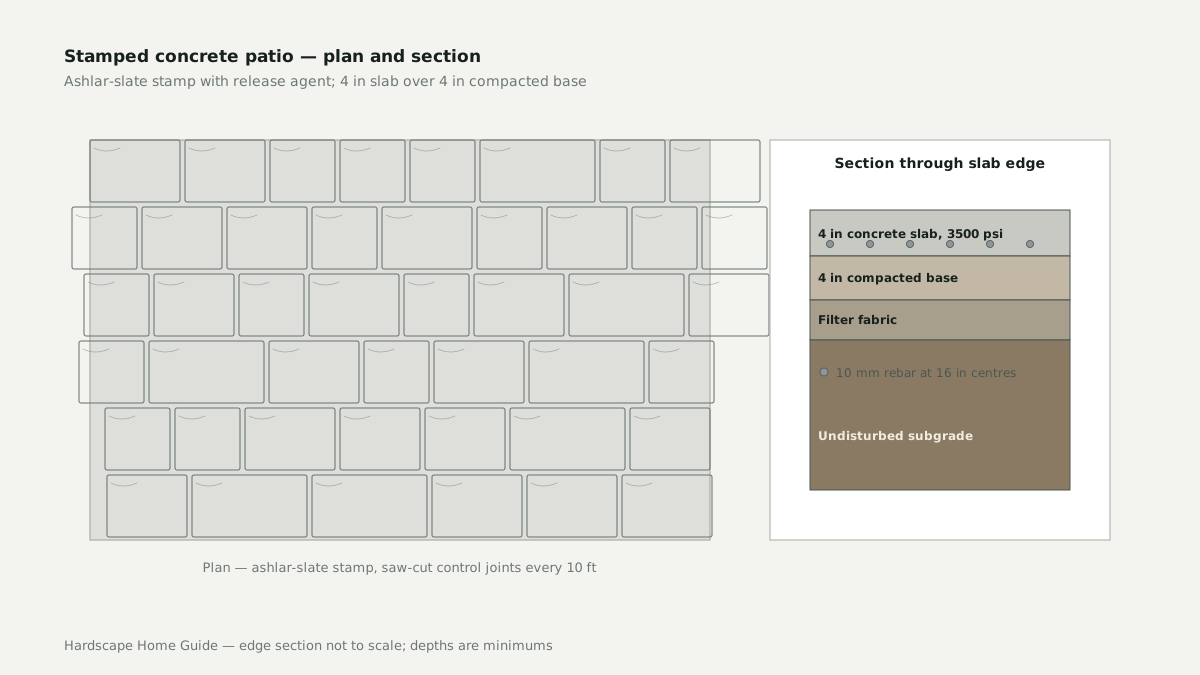
Stamped concrete is the cheapest way to get a stone look on a patio, and the least forgiving of shortcuts. The stamping is the part everyone notices. The base, the slab thickness and the control joints are the parts that decide whether it still looks right in ten years.
What it costs
| Finish | Cost per ft² | 300 ft² patio |
|---|---|---|
| Plain concrete, broom finish | $6–$10 | $1,800–$3,000 |
| Coloured concrete, no stamp | $8–$12 | $2,400–$3,600 |
| Single stamp, integral colour | $12–$15 | $3,600–$4,500 |
| Multi-pattern with release agent | $15–$18 | $4,500–$5,400 |
| Stamped with borders and bands | $18–$25 | $5,400–$7,500 |
Prices assume reasonable site access. Narrow access, sloped ground or removal of an existing slab add 15–30%.
Canadian pricing tracks US figures in Canadian dollars. Australian and New Zealand stamped concrete typically runs 20–35% higher for equivalent work.
The build-up

| Element | Specification | Notes |
|---|---|---|
| Slab thickness | 4 in (100 mm) | 5–6 in for vehicles |
| Concrete strength | 3,500 psi (24 MPa) | 4,000 psi in freeze-thaw |
| Air entrainment | 5–7% | Essential in cold climates |
| Base | 4 in compacted aggregate | 6 in on clay |
| Reinforcement | Mesh or fibre | Rebar on soft subgrade |
| Control joints | ≤ 10 ft spacing | ¼ of slab depth |
Air entrainment is the single most important specification in a freeze-thaw climate and the one most often skipped. Without it, water freezing inside the slab surface spalls it away.
Why stamped concrete cracks
Concrete cracks. It is not a defect; it is a property. The purpose of control joints is to decide where it cracks, in a straight line you barely notice, rather than randomly across the middle of the patio.
Three ways the jointing goes wrong:
- Joints too far apart. Panels should be no larger than about 10 × 10 ft and roughly square. A 20 × 20 ft patio with joints only at the perimeter will crack across the middle.
- Joints too shallow. Cut to roughly a quarter of the slab depth. A cosmetic score line does not create a plane of weakness.
- Cut too late. Within about 12 hours of finishing. After that the slab has already begun to shrink and crack on its own schedule.
Stamp patterns
| Pattern | Looks like | Best for |
|---|---|---|
| Ashlar slate | Cut stone, irregular courses | Patios, pool decks |
| Random stone | Fieldstone | Informal gardens |
| Herringbone brick | Brick paving | Paths, entries |
| Wood plank | Boards | Decks, covered areas |
| Seamless stone | Large flags | Modern patios |
Deeper textures read as more natural and trap more water. In freeze-thaw climates, prefer shallower stamps that drain and sweep cleanly.
Colour: integral, release agent, or stain
- Integral colour — pigment mixed through the whole slab. Fade is gradual and consistent, and a chip shows the same colour underneath. The most durable approach.
- Release agent — a coloured powder that stops the stamps sticking and adds a secondary tone. Most of the visual depth comes from this. It sits on the surface, so it can wear unevenly in high-traffic areas.
- Surface stain — applied after curing. Cheapest and the least durable; it wears off where people walk.
The most convincing work uses integral colour plus a contrasting release agent, then a sealer to lock the two together.
Sealing
Sealing is what holds the colour and release agent in place and makes cleaning possible. It is also the recurring cost that people forget when comparing stamped concrete to pavers.
| Type | Finish | Reseal interval |
|---|---|---|
| Acrylic, solvent-based | Glossy | 2–3 years |
| Acrylic, water-based | Satin | 2–3 years |
| Polyurethane | Glossy | 3–5 years |
| Penetrating siloxane | Matte | 5–10 years |
Wet-look sealers are slippery when wet. Ask for a non-slip additive, particularly on a patio that gets shade or pool splash.
Apply the first sealer coat at around 28 days, once the slab has dried through. Sealing too early traps moisture and produces a blotchy, cloudy finish.
Stamped concrete or pavers?
| Stamped concrete | Pavers | |
|---|---|---|
| First cost (300 ft²) | $3,600–$5,400 | $3,000–$6,600 |
| Resealing | Every 2–3 years | Not required |
| Joint maintenance | Sealant at joints | Sand top-up |
| Crack repair | Visible, difficult | Lift and relay |
| Freeze-thaw | Good with air entrainment | Very good |
The 20-year picture narrows the gap considerably. Stamped concrete wins on seamless appearance and first cost; pavers win on repairability and on sites with movement.
Our concrete patio guide covers the plain-slab specification in more detail, and the paver build-up guide explains the alternative layer by layer.
Frequently asked questions
How much does a stamped concrete patio cost?
Generally $12–$18 per square foot installed, which puts a 300 ft² patio between about $3,600 and $5,400. Complex multi-pattern work, integral colour plus release agent, and difficult access all push toward the top of the range.
Is stamped concrete cheaper than pavers?
Usually yes on first cost, by roughly 20–40%. Over time the comparison narrows: stamped concrete needs resealing every 2–3 years and is difficult to repair invisibly, whereas individual pavers can be lifted and replaced.
How thick should a stamped concrete patio slab be?
4 in (100 mm) over 4 in of compacted aggregate base for pedestrian use, with 3,500 psi concrete at minimum. Any vehicle traffic, including a ride-on mower stored on it, means going to 5–6 in with reinforcement.
Why does stamped concrete crack?
Almost always because control joints were missing, too far apart, or cut too shallow. Joints should divide the slab into panels no larger than about 10 × 10 ft and be cut to roughly a quarter of the slab depth. Concrete will crack; joints decide where.
Does stamped concrete get slippery when wet?
Smooth stamp patterns can. Ask for a non-slip additive in the sealer or a broom-finish texture on the stamp. In freeze-thaw climates, avoid deeply textured stamps that trap water.
