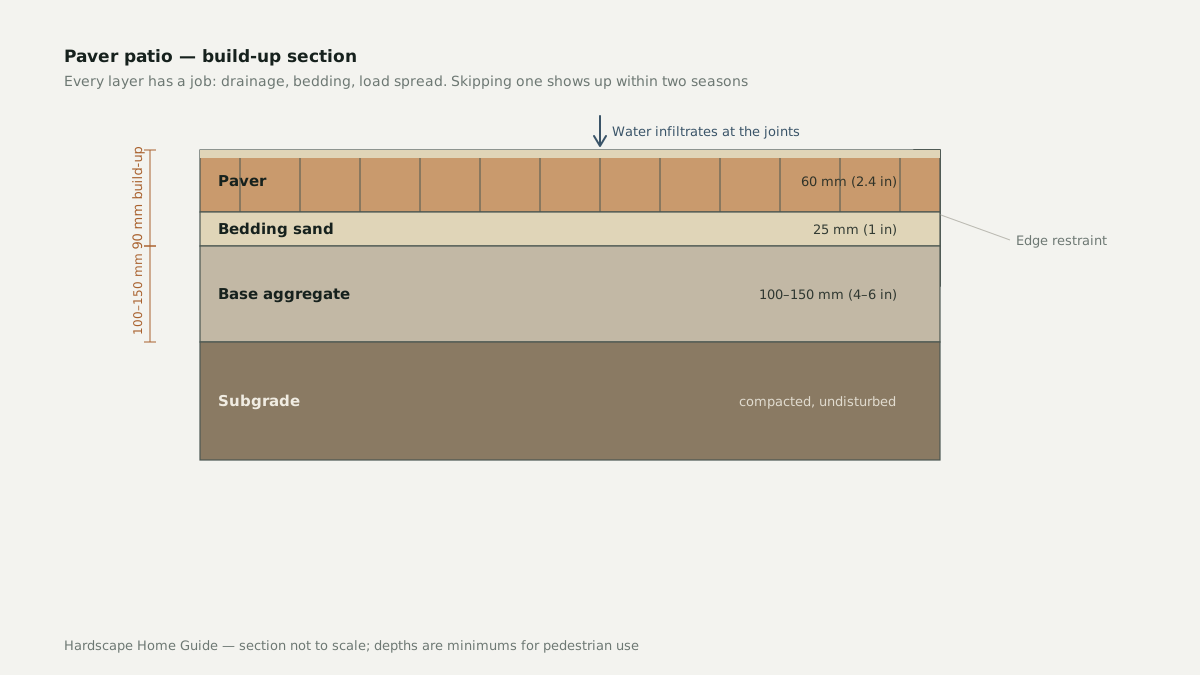
A paver patio is four layers, and you only ever see one of them. The visible 60 mm is the least important part of the assembly.
Understanding the build-up is what lets you read a quote, spot a shortcut, and understand why one patio is still flat after fifteen years while the neighbour’s is rocking after three.
The four layers

| Layer | Thickness | Job |
|---|---|---|
| Pavers | 60 mm (2.4 in) | Wearing surface |
| Bedding sand | 25 mm (1 in) | Levels and cushions |
| Base aggregate | 100–150 mm (4–6 in) | Spreads load, drains |
| Subgrade | compacted | Carries everything |
Depths are for pedestrian use on a normal subgrade. Sandy or clay soils, or any vehicle traffic, need more base.
Pavers
The wearing course. 60 mm is standard for patios; 40 mm units exist for borders and are not suitable for a patio field. Freeze-thaw climates want low absorption — under 5%.
Bedding sand
A 1 in screeded layer that lets the pavers sit level and takes up the small variations in the base. It is a levelling layer, not a structural one. Coarse, sharp, washed concrete sand is correct. Fine builder’s sand compacts into a near-impermeable layer and holds water against the base.
Base aggregate
The structural layer, and the one that is most often too thin. Crushed angular stone — 20 mm or ¾ in — with a range of particle sizes so it locks together under compaction. Rounded gravel does not interlock and will not hold.
Subgrade
The existing soil. It must be compacted and free of organic matter. Topsoil, roots and construction debris left in place will decompose and settle, and no amount of base above will compensate.
Edge restraint: the missing piece
Pavers are held in place by joint sand friction between units and by a rigid edge around the perimeter. Without restraint the field creeps outward, joints open at the edge first, and the sand washes out from there.
Two options:
- Concrete haunch — a stiff concrete mix poured against the outside of the edge course. Strongest, and standard for driveways and any paving carrying load.
- Spiked plastic or aluminium edge — faster and adequate for patios and paths. The spikes must be long enough to reach undisturbed ground, not just the base.
Drainage and fall
A patio must fall away from the building. The usual target is 1–2%, roughly ⅛ in to ¼ in per foot. Below 1% water ponds on the surface; above about 3% chairs and tables become visibly unsteady.
Water reaching the joints infiltrates into the bedding sand and the base, which is why the base must be free-draining and why the subgrade must slope as well. Base aggregate sitting in a bowl of un-drained subgrade is how patios fail in wet climates.
Where the patio abuts the house, keep the finished surface at least 6 in (150 mm) below the damp-proof course, and slope away. This is a building-code requirement in most jurisdictions and it is the detail that protects the wall.
What it costs
| Build-up | Cost per ft² | Notes |
|---|---|---|
| Basic, 4 in base, 60 mm pavers | $10–$14 | Normal subgrade |
| Standard, 6 in base, edge restraint | $14–$18 | The sensible default |
| Premium stone or complex pattern | $18–$22+ | Herringbone, tumbled |
A 300 ft² patio therefore lands between about $3,000 and $6,600. Base preparation is the largest labour component, and the least visible.
Why patios sink, and what to do about it
Almost every sunken patio traces to one of four causes:
- Base too thin for the subgrade. The most common cause by a wide margin.
- Base not compacted in lifts. A single thick layer compacts at the surface and stays loose underneath.
- No edge restraint, letting the field spread and the joints open.
- Water directed into the base — a downspout discharging onto the patio, or a fall toward the house.
The fix is not to top-dress with sand. Lift the affected area, correct the base, and relay. Anything else returns within a season.
Maintenance
- Top up joint sand every 2–3 years. Open joints are how pavers move.
- Skip the pressure washer or use it on the lowest setting. It strips the joint sand holding the field together.
- Clean organic staining with a diluted oxygen bleach rather than chlorine, which can bleach the paver colour itself.
- Re-level rather than patch if an area settles. It is a base fault.
Pavers versus concrete
| Pavers | Concrete | |
|---|---|---|
| Installed cost | $10–$22/ft² | $6–$14/ft² |
| Cracking | Moves at joints | Controlled by joints |
| Repair | Lift and replace units | Difficult, often visible |
| Freeze-thaw | Very good | Good, with air entrainment |
| Maintenance | Joint sand | Resealing, joint sealing |
Pavers cost more up front and are far more repairable. The comparison turns on how much you value that, and on how stable your subgrade is.
If you are weighing the two, our guide to concrete patio specification covers slab thickness and joint spacing, and the driveway paver guide covers the same build-up under vehicle loading.
Frequently asked questions
How deep do you dig for a paver patio?
Total excavation is the paver thickness plus bedding plus base: typically 7–9 in (180–230 mm) for pedestrian use with 4–6 in of compacted base. Add more where the subgrade is clay or poorly drained.
What goes under patio pavers?
Four things, in order: compacted subgrade, 4–6 in of crushed aggregate compacted in two lifts, 1 in of screeded bedding sand, then the pavers. An edge restraint locks the field, and joint sand fills the gaps.
Do I need a concrete base under patio pavers?
No, and it is usually counterproductive. A flexible aggregate base drains and moves with freeze-thaw; a rigid slab under pavers traps water and transfers its cracks upward. Concrete is for the slab, not for bedding pavers.
How much does a paver patio cost per square foot?
Installed, $10–$22 per square foot in most US markets, with premium stone and complex patterns at the top. A 300 ft² patio therefore lands between about $3,000 and $6,600. Base preparation is the largest labour component.
Why do my pavers sink or shift?
Almost always insufficient base depth, base not compacted in lifts, or a missing edge restraint. Water softening the subgrade under a too-thin base is the usual mechanism. Re-laying without fixing the base repeats the failure.
