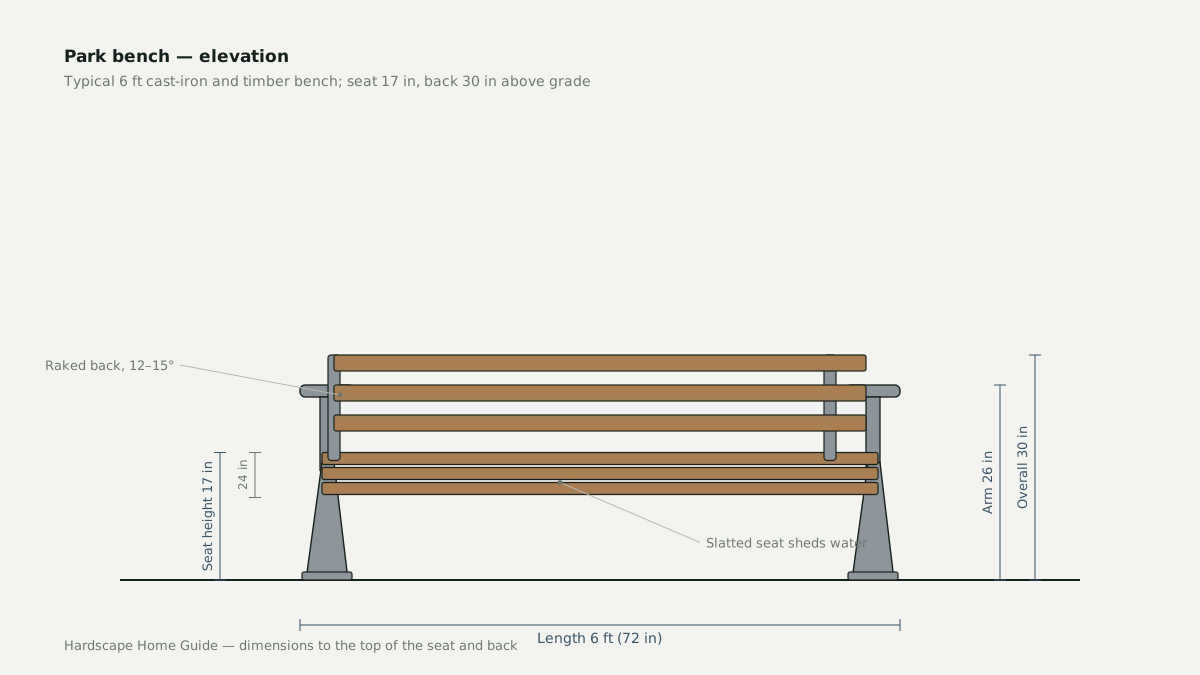
A park bench is specified rather than shopped for. Get the seat height, the back rake and the fixing right and a bench will serve for decades. Get them wrong and it will be uncomfortable, unstable, or gone.
Dimensions that are not negotiable

| Dimension | Standard | Acceptable range |
|---|---|---|
| Seat height | 17–18 in (430–460 mm) | 16–19 in |
| Seat depth | 15–18 in (380–460 mm) | 14–20 in |
| Back height above seat | 12–16 in (300–400 mm) | 10–18 in |
| Overall height | 30–34 in (760–860 mm) | 28–36 in |
| Arm height | 8–10 in above seat | 7–11 in |
| Length | 5–6 ft (1.5–1.8 m) | 4–8 ft |
Seat height is measured to the top of the seat surface, from finished grade — not from the top of a concrete pad.
Two of these matter more than the rest. Seat height controls how easily someone stands up, which is why 17 in is consistent across standards. Seat depth controls whether the back provides any support at all: much beyond 18 in and shorter users cannot reach the backrest, so they perch forward and the bench becomes uncomfortable within minutes.
Materials
| Material | Lifespan | Maintenance | Best for |
|---|---|---|---|
| Cast iron frame, timber slats | 25–40 yrs | Refinish slats | Parks, civic spaces |
| Powder-coated steel, timber slats | 15–25 yrs | Touch up coating | Commercial |
| Powder-coated aluminium | 20–30 yrs | Minimal | Coastal, humid |
| Hardwood (teak, robinia) | 15–25 yrs | Annual oil (optional) | Gardens |
| Softwood, pressure-treated | 8–15 yrs | Refinish regularly | Domestic |
| Recycled plastic | 20–30 yrs | None | Wet climates |
| Solid concrete | 50+ yrs | None | Vandalism-prone sites |
A cast-iron frame is often the longest-lived component. Timber slats are the wearing part and should be replaceable individually.
Timber species
Decay resistance varies enormously by species, and it is the single biggest predictor of how long a timber bench survives. Teak and robinia are naturally durable and can be left untreated. Oak and sweet chestnut are durable but move more. Softwoods need pressure treatment and still have the shortest outdoor life.
Metal finishes
Powder coating over hot-dip galvanising is the most durable finish available for steel. Powder coating alone fails at any scratch, and once water reaches bare steel the rust spreads under the coating and lifts it in sheets. In coastal air, specify stainless or hot-dip galvanised fixings — not zinc-plated, which disappears in a season.
Fixing down
A free-standing bench in a public or semi-public place will move, tip, or disappear. Proper fixing:
- Cast a concrete pad — at least 4 in thick, wider than the bench feet, and below the finished paving level.
- Use stainless or hot-dip galvanised anchors. Zinc-plated anchors corrode fast in damp ground.
- Choose tamper-resistant fixings in public settings — security Torx or shear-nut bolts.
- Allow for drainage. A bench foot sitting in a puddle rots or rusts from the bottom up. The most common failure point on any bench is the foot.
Placement
- Spacing along a path — 20–40 ft (6–12 m) apart in a park setting, closer in a small garden where benches mark destinations.
- Clear of the route — a seated person should not block the path. Set the bench back far enough that its footprint, including outstretched legs, is outside the walking width.
- Face the view — the path should pass behind a bench that faces a view, not in front of it.
- Consider shade — a bench in full afternoon sun in a hot climate is unused regardless of how good it looks.
- Allow accessible space — where a bench forms part of an accessible route, provide clear floor space beside it for a wheelchair user to sit alongside a companion.
Maintenance
| Material | Task | Interval |
|---|---|---|
| Timber slats | Clean, apply UV oil | Annual (optional) |
| Powder-coated metal | Wash, touch up chips | Annual |
| Cast iron | Check for coating failure, repaint | 3–5 years |
| Fixings | Check torque, replace corroded | Annual |
| Concrete pad | Clear debris, check drainage | Annual |
Grey, weathered timber is not decay. If the surface is silver and the timber is hard, the bench is fine. If a screwdriver sinks into it, it is not.
If you are furnishing a garden rather than a public space, our garden bench guide covers the domestic options, and the patio layout guide covers how seating fits into a wider plan.
Frequently asked questions
What is the standard height of a park bench?
Seat height is 17–18 in (430–460 mm) above grade, and the top of the back sits about 30–34 in (760–860 mm) above grade. Seat depth runs 15–18 in. These figures are consistent across public seating standards because they suit the majority of adults.
Which is more durable, timber or metal park benches?
A cast-iron or powder-coated steel frame outlasts timber, but the seat material is usually what fails first. Hardwood slats can be replaced individually. Fully metal seats are the most durable and the least comfortable in both hot and cold weather.
How should park benches be fixed down?
Anchor to a concrete pad with stainless or hot-dip galvanised fixings, not to the paving surface alone. In public settings, tamper-resistant bolts are standard. Benches left free-standing move, tip and disappear.
How far apart should park benches be placed?
Space them 20–40 ft (6–12 m) apart along a path, each set back far enough that a seated person does not block the route. Where the bench faces a view, the path should pass behind it.
