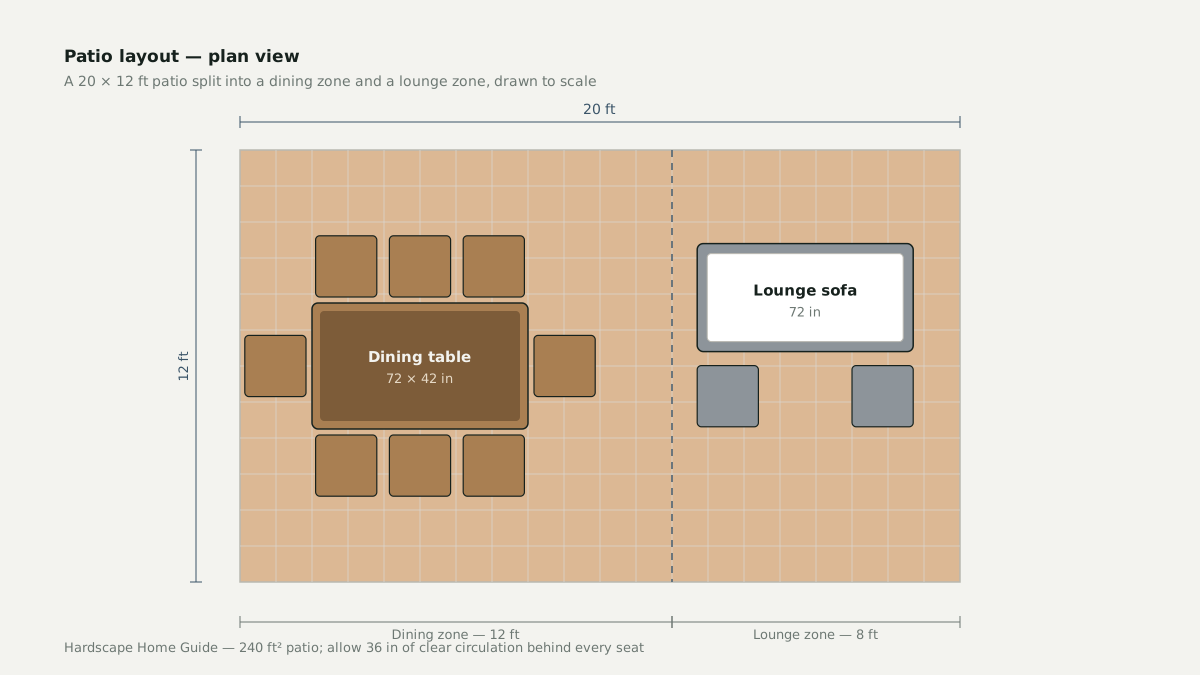
Most patio sets are bought for the wrong reason. The fabric looks right in the showroom, the price is acceptable, and nobody measures the space behind the chairs until the first dinner party, when everyone is pinned against the fence.
Layout decides whether a set works. Quality decides how long it keeps working. This guide covers both, in that order.
Start with the clear space, not the set
A chair needs room to be pushed back and stepped out of. That figure is remarkably consistent across seating standards: 36 in (90 cm) of clear space behind every chair. It is the same reason accessible routes are dimensioned the way they are.
Work backwards from that. A standard six-seat table is 72 × 42 in. Add 36 in behind the chairs on all sides and the dining zone needs a hard surface of about 12 × 10 ft. On a 10 ft patio, a six-seat table does not fit — not because the table is too big, but because the people are.

Dining zone versus lounge zone
These have different space budgets and mixing them badly is the most common planning error.
| Zone | Hard surface | Seats | Clear behind seats |
|---|---|---|---|
| Dining | 12 × 10 ft | 4–6 | 36 in |
| Lounge | 9 × 9 ft | 3–5 | 18 in |
| Combined | 16 × 12 ft | 7–11 | 36 in between |
Dimensions assume a walkway is not required through the seating. Add 24 in of width wherever people pass behind occupied chairs.
Dining needs more clearance because chairs move. Lounge seating is static, so 18 in behind it is enough for airflow and for reaching a power point. If you have to choose, give the dining zone its 36 in and squeeze the lounge. A lounge that is slightly tight is fine. A dining table you cannot stand up from is not.
What the set is actually made of
Frame material determines lifespan far more than the cushion fabric that sells the set.
Powder-coated aluminium
The default for good reason. It does not rust, it is light enough to move alone, and it survives coastal air. Welded joints are stronger than bolted ones; check the joints, not the paint.
Steel
Heavier and cheaper, and it will rust wherever the coating is scratched. In coastal or humid climates, only consider hot-dip galvanised or fully powder-coated steel. Untreated mild steel outdoors is a two-year purchase.
Teak, eucalyptus and acacia
Teak has natural oils that resist rot and it weathers to silver-grey without failing. Eucalyptus and acacia are close in appearance at a lower price but benefit from an annual oil. All three are heavy — a plus in wind, a minus when you want to move the set to mow.
Resin and recycled plastic
Effectively maintenance-free and genuinely durable, and the appearance has improved a great deal. Heavier than it looks and it holds heat in direct sun.
How many pieces do you actually need?
Sets are sold in piece counts that assume more seating is better. In practice, a set is only as good as its seating-to-table ratio.
- 4-piece — a table and four seats. Right for a couple or a small family, and the best fit for patios under 12 ft wide.
- 6-piece — table plus five or six seats. The common compromise and usually the best value per seat.
- 7-piece and up — table plus six or more. Only worth it if the clear space exists. Otherwise you have bought chairs nobody can sit in.
Bench seating instead of individual chairs is worth considering for larger tables: it seats more people per foot of table edge and stows under the table when not in use.
What it costs, and where the money goes
Prices below are US retail for a full set including seating. Expect similar figures in Canadian dollars, and roughly 20–40% higher in Australia and New Zealand once freight and duty are included.
| Set | Frame | Price range | Lifespan outdoors |
|---|---|---|---|
| 4-piece dining | Aluminium | $500–$1,500 | 8–12 yrs |
| 6-piece dining | Aluminium | $900–$2,600 | 8–12 yrs |
| 7-piece dining | Aluminium | $1,400–$3,500 | 8–12 yrs |
| 4-piece lounge | Timber | $700–$2,800 | 10–15 yrs |
| 6-piece lounge | Resin | $900–$3,000 | 12–20 yrs |
Prices are indicative retail for mid-range product. Sale pricing varies by 30–40% seasonally, with the deepest discounts in late summer.
Buying once: the checklist
- Measure the clear space behind where chairs will sit, not the space the table occupies.
- Check the frame joints. Welded aluminium outlasts bolted sections that loosen.
- Ask what the cushion fill is. Reticulated quick-dry foam, or plan to store cushions.
- Confirm seat height. 17–18 in (43–46 cm) is comfortable for most adults. Lower is harder to stand from.
- Buy for the wind. If your patio is exposed, weight matters. Stackable or folding pieces can be stored when a storm is forecast.
- Budget for covers. Breathable covers cost little and are the single cheapest way to extend a set’s life.
The set that lasts is rarely the most expensive one. It is the one that fits the space it was bought for, so it gets used, cleaned and looked after.
Care through the year
Wash frames with mild soap and water, not a pressure washer, which drives water into joints and lifts powder coating. Bring cushions indoors before the first frost or the first monsoon season, whichever your climate delivers. In snow regions, store glass-topped tables upright so pooled water cannot freeze and crack the top.
If your patio is still being planned, the surface underneath matters as much as the furniture on it. Our guides to paver patios and concrete patios cover the base depths and drainage that decide whether the surface stays flat under a heavy dining set.
Frequently asked questions
How big a patio do I need for a dining set?
Allow a clear 36 in (90 cm) behind every chair so people can push back and stand. A six-seat 72 × 42 in table therefore needs a hard surface of roughly 12 × 10 ft. Anything tighter and chairs collide with the edge.
Is a 4-piece or 7-piece patio set better value?
Per seat, the larger set is usually 15–25% cheaper. But a 7-piece set you cannot comfortably seat guests in is worth less than a 4-piece set that fits. Size the space first, then buy the set that fills it.
What is the most weather-durable patio set material?
Powder-coated aluminium frames outlast steel in coastal air, and they are light enough to move alone. Teak and eucalyptus weather to grey and can be refinished. Avoid untreated mild steel and, in humid or coastal zones, avoid non-galvanised steel entirely.
Do patio sets need covers or storage in winter?
Cushions should come indoors. Frames last longer under a breathable cover, but never a non-breathable plastic tarp, which traps condensation. In snow-load areas, store glass-topped tables upright.
Sources and references
- Americans with Disabilities Act Standards — accessible route clear width
- Australian Standard AS 4685 — playground and public seating dimensions — reference for seat-height ergonomics
- FSC product labelling — responsible timber sourcing
