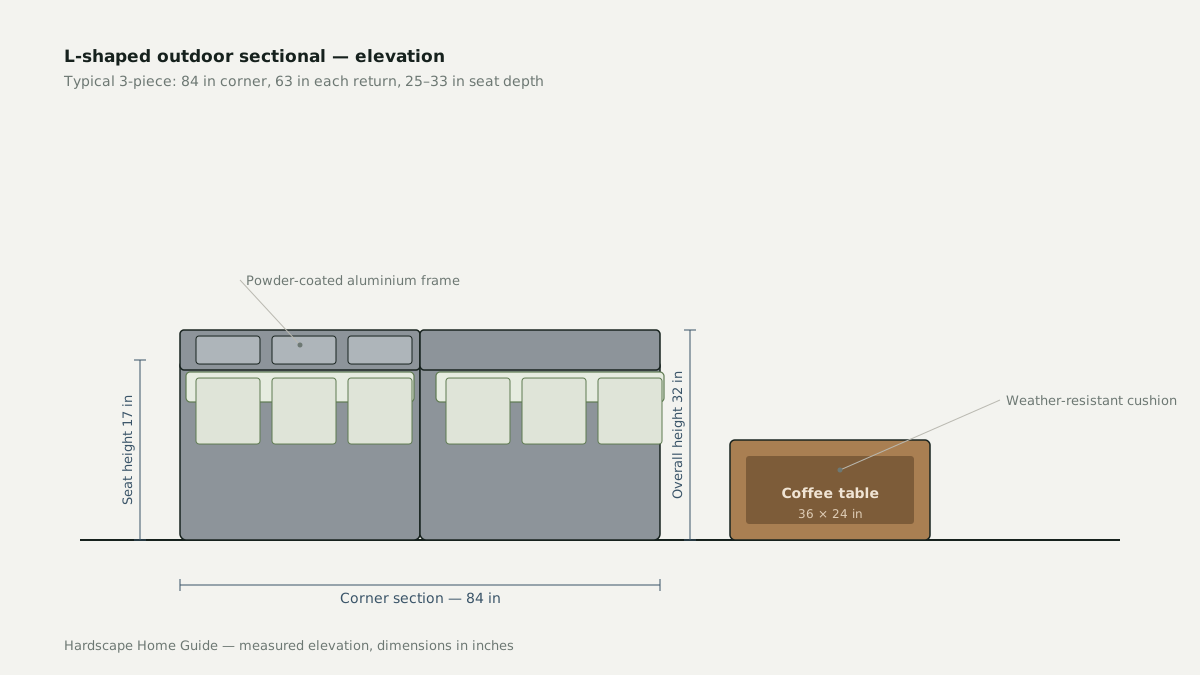
An outdoor sectional is a layout decision that happens to be sold as furniture. Buy the shape that suits your patio and it will be the most used piece you own. Buy for looks alone and you will spend years walking around it.
L-shape, U-shape or straight
Sectionals are described by how many sides they close off.
- L-shaped — two runs meeting at a corner. Fits most patios, leaves two sides open, and is the safest choice for a space under 14 ft wide.
- U-shaped — three runs, enclosing three sides. Excellent for conversation in a large yard, oppressive on a small patio because it removes the walking routes.
- Straight with a chaise — a single run plus one extended seat. The most space-efficient way to add a lounging position.

The dimensions that matter
| Dimension | Typical | What it controls |
|---|---|---|
| Seat height | 17 in (43 cm) | How easily you stand up |
| Seat depth | 25–33 in (64–84 cm) | Upright vs lounging |
| Corner section | 84 in (213 cm) | Floor area and cost |
| Back height | 28–34 in (71–86 cm) | Support vs view |
| Arm height | 22–26 in (56–66 cm) | Head comfort when lying |
Seat depth above 30 in turns a sofa into a daybed. That suits lounging and is awkward for sitting upright with a plate.
Seat height is the one people get wrong. Deeper, lower sectionals look generous in photographs and are genuinely difficult to get out of after a long meal, particularly for older guests. 17 in is the standard for a reason.
Plan the circulation before the furniture
A sectional needs room on the open sides:
- 18 in (46 cm) behind for airflow, cleaning and reaching behind cushions. Less than this and the back cushions stay damp.
- 14–18 in between the sofa and the coffee table. Enough to put a drink down without standing, close enough that you do not have to lean.
- 30–36 in (76–90 cm) for any walking route that passes the seating. This is the dimension that decides whether the patio works.
Modular versus fixed
Modular sectionals are separate pieces that clip together. They cost 10–20% more than an equivalent fixed frame and they earn it back:
- You can reconfigure the shape without buying new furniture.
- Individual pieces can be replaced or moved for cleaning.
- They store flat if you need the patio clear for winter or a party.
- Damage is confined to one module.
The trade-off is that cheap modular hardware loosens. Check that the connectors are metal, not plastic, and that the frame sections are aluminium rather than tubular steel.
Frames: what survives outdoors
Powder-coated aluminium
The best default. Does not rust, light enough to rearrange alone, and it handles salt air. Look for welded rather than bolted joints on the load-bearing corners.
Resin and HDPE
Essentially weatherproof and increasingly convincing in texture. Heavy, and it warms up in direct sun, so pair it with cushions.
Timber
Teak and eucalyptus age well and can be refinished. Softwoods will not last outdoors without pressure treatment, and even then they need annual attention.
Wicker and rattan
Natural rattan belongs under cover. Synthetic all-weather wicker over an aluminium frame is the outdoor version and performs well, provided the weave is tight and the frame underneath is not steel.
Cushions decide the lifespan
Replacement cushions typically cost 30–40% of the original set price, so the cushion is a maintenance item, not a detail.
| Cover / fill | Rain | UV fade | Notes |
|---|---|---|---|
| Solution-dyed acrylic / quick-dry foam | Good | Excellent | Best all-round |
| Olefin / quick-dry foam | Good | Good | Lower cost |
| Polyester / polyurethane foam | Poor | Fair | Mildews inside |
| Any cover / no fill care | Poor | Varies | Store indoors |
Quick-dry reticulated foam passes water through and drains. Polyurethane foam absorbs it and stays damp for days, which is what mildew feeds on.
What it costs
| Configuration | Frame | Price range |
|---|---|---|
| 2-piece with chaise | Aluminium | $900–$2,400 |
| 3-piece L-shape | Aluminium | $1,200–$3,800 |
| 5-piece U-shape | Aluminium | $2,400–$6,000 |
| 3-piece L-shape | Timber | $1,800–$4,500 |
Cushions are included at the higher end of each range and sometimes excluded at the lower end. Confirm before comparing.
Keeping it usable
Brush or vacuum cushions before they are stored, not after, so grit does not work into the fabric over winter. Clean aluminium frames with mild soap; skip the pressure washer, which forces water into the joints and lifts the coating. If the sectional sits on a hard surface, felt pads under the feet prevent scratching and let air circulate underneath.
If the patio itself is still to be built, the surface under the sectional is worth getting right first — see our guides to patio pavers for a flexible base, or concrete patios if you want a seamless slab. And if you are planning the whole space rather than one piece, our patio set layout guide covers how the zones fit together.
Frequently asked questions
How much space does an outdoor sectional need?
A three-piece L-shaped sectional occupies roughly 84 × 84 in (213 × 213 cm) of floor, and you should leave 18 in (46 cm) behind it for airflow and 30–36 in (76–90 cm) in front for a coffee table and walking room.
Is an L-shaped or U-shaped sectional better for a patio?
L-shaped suits most patios because it leaves two open sides and one corner. U-shaped seating encloses the space, which is sociable in a large yard but overwhelming on a patio under about 12 ft wide.
What cushions survive rain and sun?
Solution-dyed acrylic or olefin covers over quick-dry foam hold colour and drain fastest. Standard polyurethane foam soaks up water and stays damp, which is what produces mildew within a season.
How long should an outdoor sectional last?
With an aluminium or high-quality resin frame and cushions stored out of weather, expect 8–15 years. Frame life is rarely the limit; cushions are, and replacement cushions are often 30–40% of the original set price.
Sources and references
- American Society for Testing and Materials — UV exposure testing for textiles
- Australian Standard AS/NZS 4399 — sun protective clothing and fabrics — UPF rating method applied to outdoor textiles
- Consumer Product Safety Commission — outdoor furniture stability
