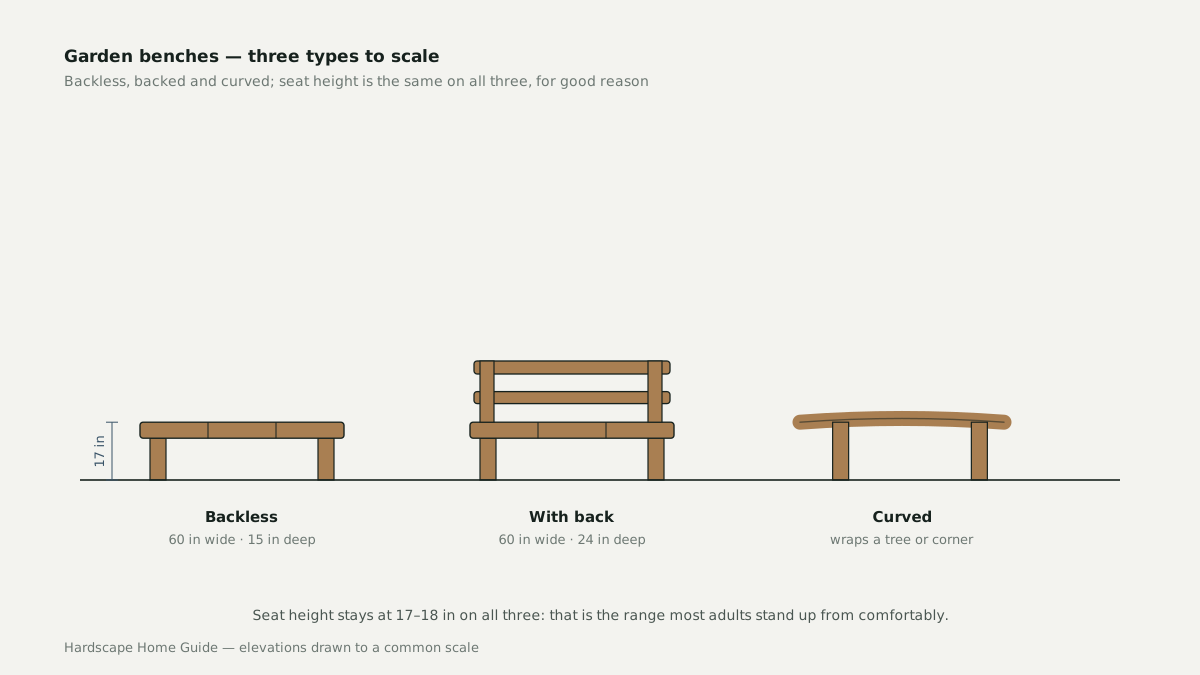
A garden bench is a small purchase with a long life, and the difference between one that lasts three years and one that lasts twenty is almost entirely material and placement. Both are decided before you buy.
Dimensions

| Dimension | Comfortable range | Notes |
|---|---|---|
| Seat height | 17–18 in (430–460 mm) | The critical dimension |
| Seat depth | 15–18 in (380–460 mm) | Deeper needs a back |
| Width | 4–6 ft (1.2–1.8 m) | 5 ft seats two comfortably |
| Back height | 12–16 in above seat | Below 12 in offers little support |
| Arm height | 8–10 in above seat | Helps standing up |
A bench without a back needs to be shallower, or it becomes a perch. Backless benches work best at 15–16 in deep.
Materials
| Material | Lifespan | Annual care | Cost |
|---|---|---|---|
| Teak | 20–30 yrs | None, or oil to hold colour | $$$$ |
| Robinia / acacia | 15–25 yrs | Oil annually | $$$ |
| Eucalyptus | 10–20 yrs | Oil annually | $$ |
| Pressure-treated softwood | 8–15 yrs | Stain every 2–3 yrs | $ |
| Powder-coated aluminium | 20–30 yrs | Wash | $$$ |
| Cast iron with timber slats | 25–40 yrs | Refinish slats | $$$$ |
| Recycled plastic | 20–30 yrs | None | $$$ |
| Composite | 15–25 yrs | Wash | $$$ |
Prices are relative. A softwood bench may cost a quarter of a teak bench and last a third as long — the annual cost is not very different, but the teak bench needs far less attention.
About teak, and the alternatives
Teak earns its reputation: dense, naturally oily, resistant to rot and insects, and stable enough that it does not warp badly. It is also expensive, and old-growth sourcing is a genuine concern. Look for FSC certification.
Robinia (black locust) is the closest performer at a lower price and is increasingly common in European and North American furniture. Eucalyptus and acacia sit below that: good value, but they benefit from an annual oil and will check and grey faster if left alone.
Metal benches
Powder-coated aluminium is the low-maintenance choice and it handles coastal air well. Cast iron is heavier and lasts longer still, but a full metal seat is uncomfortable in both heat and cold — which is why cast iron benches almost always pair with timber slats.
Position: where benches actually fail
The single most common cause of a failed wooden bench is where it was put, not what it was made of. Benches fail at the feet.
- Never on bare soil. Timber feet in soil rot within a few seasons. Set the bench on a concrete pad, paving, or compacted gravel.
- Clear of sprinkler overspray. A bench that is watered twice a week will not last, whatever it is made of.
- Back to the prevailing weather. A bench facing into the wind is unused and takes the worst of the rain on its front and fixings.
- Level ground. A bench that rocks stresses its joints every time someone sits down.
- Shade in hot climates. A bench in full afternoon sun in Arizona or Queensland will be too hot to sit on for half the year.
Weathering: what is normal and what is not
Untreated timber outdoors turns silver-grey. This is a surface change, not decay, and it is harmless — many people prefer it. Once the surface has weathered, no oil will bring the original colour back; you would need to sand it off.
Decay looks different: dark, soft patches, often at joints and feet, and the timber gives under a screwdriver. That is structural and needs the affected part replaced.
| Sign | Weathered (fine) | Decayed (act) |
|---|---|---|
| Colour | Even silver-grey | Dark, blotchy |
| Texture | Hard, dry surface | Soft, spongy |
| Location | Even across the bench | Concentrated at joints and feet |
| Screwdriver test | Will not penetrate | Sinks in easily |
To hold the original colour, oil annually with a UV-filtering product and sand lightly first. To accept the grey, do nothing — it is stable.
Buying and upkeep
- Sit on it before buying. Seat depth and back height vary enough to matter. A bench that looks right online may not support your back.
- Check the joinery. Mortise-and-tenon or bolted with metal thread inserts. Staples and screws into end grain loosen.
- Confirm the fixings are stainless. Especially on any bench that will live outdoors year-round.
- Oil or seal in the first year if you want to keep the colour. After that the surface is sealed and the window has passed.
- Tighten fasteners annually. Wood shrinks and swells with the seasons, and joints work loose.
- Store or cover in extreme climates. Not strictly necessary, but it adds years in areas with heavy snow or monsoon seasons.
If you are furnishing a public or commercial space rather than a garden, our park bench specification guide covers vandal-resistant fixing and the standards that apply. And if the bench is part of a wider plan, the patio layout guide covers how seating zones fit together.
Frequently asked questions
Which wood is best for a garden bench?
Teak and robinia last longest untreated because of their natural oils and density. Eucalyptus and acacia are good mid-priced options but benefit from an annual oil. Cheaper softwoods need pressure treatment and still have the shortest life outdoors.
Is a metal garden bench better than wood?
Metal frames last longer and need less maintenance, but the seat surface matters: bare metal is uncomfortable in heat and cold. Powder-coated aluminium or cast iron with timber slats is the usual compromise.
How do I stop a wooden bench going grey?
Grey is the natural weathered surface, not rot, and it is harmless. To hold the original colour, apply a UV-filtering oil annually and sand lightly first. Once the surface has gone silver, no oil will bring the colour back.
Where should I put a garden bench?
Facing the best view with its back to the prevailing weather, on a firm level surface, and clear of sprinkler overspray. Benches placed on bare soil rot at the feet faster than any other single factor.
